
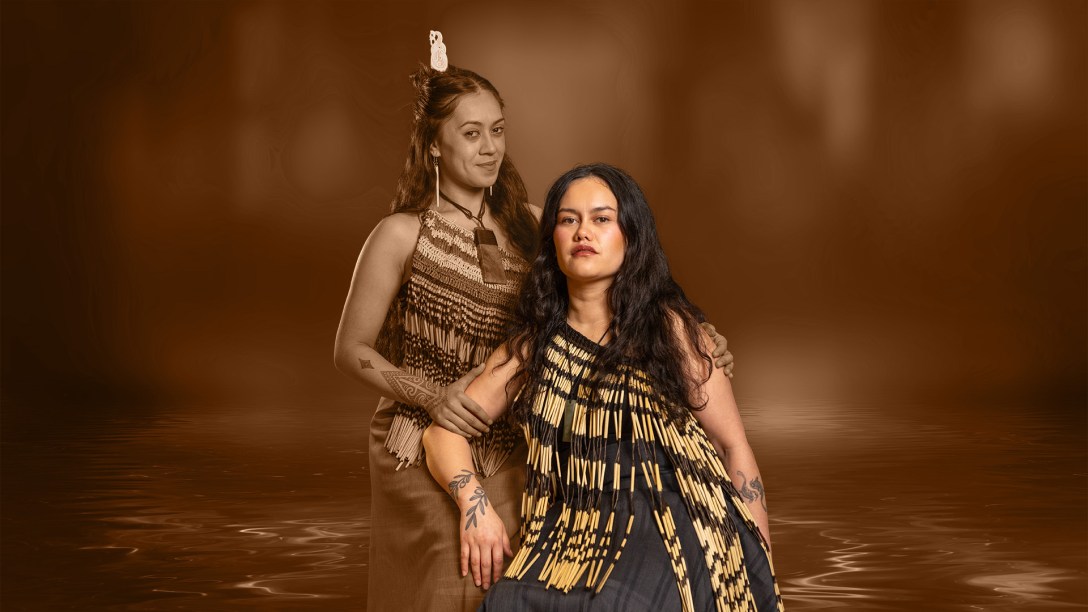
Juanita Hepi reflects on Wahine Mātātoa: The (Mostly) True Story of Erihāpeti Pātahi, written by Cindy Diver, directed by Kim Garrett, with musical direction by Ariana Tikao, at the Court Theatre, Saturday 18 April 2026.
Six weeks ago, my sister, Jeni Leigh Walker passed away. She was 48. Three weeks later, the writer of this play lost her husband. Grief is present, in all of the places, spaces and bodies. This introduction then, is both a poetic beginning and an end I guess.
In the grief filled days after my sister’s passing, my son Manu was meant to begin rehearsals for Wahine Mātātoa. Jeni Leigh was excited, really excited. In our whānau, our tamariki are everything and so I keep going back to the week she died, and how she was talking about seeing his debut. She didn’t make it. There’s an emptiness in that, and a space beside me in the theatre tonight, but I’m also reminded of something familiar. My ancestors (of which Jeni Leigh is now one) have always fought for things we don’t always get to see through like the Ngāi Tahu Claim – Te Kerēme, or the return of Pūrāu Reserve 4622 to Ngāti Wheke or te reo Māori becoming an official language. All of the people who started those movements passed away before they could see the real fruits of their labour. Baby nīkau palms are like that too, we nurture them knowing they will flourish long after we have passed. Similarly, my sister and I spent most of our lives pushing for Ngāi Tahu stories to be heard and valued across the arts. We became the artists, the producers, the directors, the writers. Sometimes it felt like shouting into the void but we did it anyway, some called us stubborn and we called ourselves whatever we wanted. So tonight I write with grief and celebration sitting side by side. In te ao Māori, they always do.
With that long beginning, I can’t pretend to be neutral. My son is in this play. I directed its development season and premiere in 2023, travelling back and forth to Dunedin because this was a play about Kāi Tahu women, employing Kāi Tahu artists, on Kāi Tahu whenua. It always felt like it needed to land here at The Court Theatre. In the final week of rehearsals, I had to leave for other work so Hilary Halba and Cindy Diver took over. When I came back to see it, the bones were the same. A little bit more meat, and including Marty Robert’s lighting and Ruby Solly’s taonga pūoro, Wahine Mātātoa was deepening.
Something I’ve always loved about this script is the use of projection to show tīpuna/ancestor images. It is also a little risky from an Ao Māori perspective. While we adore the memories that photography stirs, some of our ancestors were not keen to have their photos taken. Like my grandfather David Stone of Ngāti Kahungunu. Once, at a WORD event, his image was the only slide that refused to show. I’m not overly mystical, but it still makes me wonder. Not everything needs explanation to be understood and of course the most important things are impossible to define, like love, longing and grief.
The night opens with a whakatau. I arrived just in time to see my cousins from Ngāi Tūāhūriri gathering at the top of the stairs. I love that moment. Quiet, and disruptive. Whakatau might be normalised in arts spaces now, but Māori things still seem to unsettle people. My cousin who is one of our go-to for tikaka, spots me, she gives a sharp nod, and calls me up. I walk swiftly up the stairs to join them. We finish the whakatau, sing Manu Tiria, loudly, with feeling. I am proud to be Kāi Tahu. More than that, I’m proud that our stories are centre stage tonight, and that we, as whānau, are the ones opening the door. Then it’s speeches, gin, schmoozing, rewena bread. By 7pm I’m in the Ravenscar Room, surrounded by sponsors, donors, an open bar, and expensive perfume. I have a brief moment where I think my anti-classist instincts might ruin future funding, before realising the perfume is mine. Later, I’m talking to Māori about the show. None of them were in the Ravenscar room. That tells you what you need to know about who the theatre still centres, is funded by, and is accessible to.
Manu is 20. Nearly 21. This is his Court Theatre debut, but he’s grown up in it. His dad’s a circus artist. I’m a multidisciplinary storyteller. He was meant to study sociology at Otago, but Otago is far from his whānau. He’s a pā kid. A marae baby. He wasn’t settled. I told him to come home. He did. He’s happier and so am I. He’s also on What Now, and kids love him. So yes, this is a long preamble, but I repeat, I can’t be unbiased when speaking about this work and I also believe that neutrality is a fiction. In the arts, it’s a skin-coloured leotard.
Wahine Mātātoa doesn’t sit still. It’s the Erin Brockovich of theatre. The Woman King of Kāi Tahu. “Mostly true” storytelling that doesn’t behave but provides all of the human things, romance, sex, trade, warfare, whakapapa, courtrooms, ocean, bush. Time folding in on itself. It lives in that uncomfortable space between Māori storytelling that has been shaped by Euro-American forms, or colonial forms that have been pierced by a Māori lens and yes, both can and probably are true. I want to shout out to my whanauka Helen Brown and Cindy Diver whose research pushes beyond standard playwriting into something closer to historical literature, nuanced, multilayered and gently held. Ngāi Tahu are centred. Our ancestors are named again and again. Hine Kakai, Tūhawaiki. Erihāpeti Pātahi. Alongside Wakefield. Governor Grey. We see ourselves, properly. Aotearoa history is as rich, as dark, as funny and as complex as anywhere else. Maybe it will make it into the history curriculum after all.
The women actors and characters carry this work. Grace, Tomairangi, Ariana and Emma move across time, place and character with precision and force. Manu, the only tāne, holds mana, comedy, clowning, and I sense a ‘koro’ accent (that is my dad by the way). I’m proud of him, not just the performance but the way he carries himself, before, during, and after the performance. He honours our whenua, whakapapa, and whānau, and if he’s going to tell our stories I’m so glad they’re ours. Grace playing her own ancestor, Erihāpeti, provides a deeper meaning to the work. Emma Katene is effortless, her Kāi Tahu mita/dialect = another honouring. She steadies the room and we see why she has been in so many of the Court productions. Please Ōtautahi keep funding and finding ways to keep our artists here. Tomairangi too, brings that same talented force. There’s something about this whenua that produces women like this, not only wāhine Māori, but all women who walk this swamp. You can feel and see it all around here. Ariana Tikao is the show’s conscience, grounding us, reminding us to breathe. Ariana is another whanauka from my marae at Rāpaki. She holds space not through volume but in the places she chooses silence, the in between and liminal spaces from one taonga puoro note to the next.
We’re nearing the end of this chaotic banter, and so shout out to Rosie’s set which holds everything together. A pool below, a mirror above, reflections folding back in on themselves like time and genealogy and nature. It allows us to slip between worlds, which is important because some characters are present for only a fraction of a moment. We need this set to help us make sense of what we’re seeing. The actors move carefully around the pool, it makes for tense viewing, they have mastered its watery edges and from my past life as an actor, I love the times when you are in no doubt that this takes practice. Actors make it look easy right…!?!
There is a moment early on where I clock three kids in the second balcony. They become my barometer. No phones, no fidgeting, just elbows balanced on the railings, eyes and bodies towards the stage. When they laugh, it cuts through the room. Our tamariki are an excellent test of our storytelling prowess. I’m transported back to the stage when Tomairangi recites her pre-interval monologue and I’m gasping, it’s beautiful, powerful, and in a play with so many ‘favourite parts’, I’m so looking forward to seeing this part again.
Thank you Cindy for this work. Māori theatre has often leaned hard into grief, into heaviness. My sister and I used to joke/complain about “sex and the savage,” the flattening of our stories into trauma. This isn’t that. Those elements are there, but they don’t dominate. They sit inside a fuller, more complicated humanity and Kim Garrett as the director has kneaded and shaped it into existence. Like the making of a rewena bread, it takes more than just ingredients and baking to fully comprehend.
When we leave, people are buzzing. I find those same kids again. They are excited, they are also Kāi Tahu. I speak to their parents who tell me that these three girls attend different schools – Te Whānau Tahi, and Queenspark School. They brought their children along tonight because they just wanted their daughters to see strong wāhine Māori on stage. My sister should have been here for this, that will weigh heavy for a while but mostly I know she will be proud proud proud. It has taken me a week to write this text, but tonight I am going to the Q & A session of the show, I am taking my 2 children and Jeni Leigh’s eldest daughter and we will continue showing up for these stories.
Will you?
Wahine Mātātoa: The (Mostly) True Story of Erihāpeti Pātahi runs until Saturday 9 May 2026. Click here to find out more about the cast and creative team, and to download the programme.


