
Nick Harte reviews Rameau / Poulenc / Beethoven, presented by the Christchurch Symphony Orchestra, conducted by Chad Kelly, at the Douglas Lilburn Auditorium, Christchurch Town Hall, Saturday 12 September 2026.
I was elatedly taken aback when the concert opened (sans introduction) with “Entrée de Polymnie” from Jean-Philippe Rameau’s final opera Les Boréades, as it’s one of my most cherished pieces of music of all time and I had not been aware of its inclusion in the night’s repertoire. I was first introduced to Rameau via Víkingur Ólafsson’s impossibly sublime piano transcription of the aforementioned orchestral interlude, which he abbreviated as “The Arts and the Hours” (originally titled “The Arrival of the Muses, Zephyrs, Seasons, Hours and the Arts”), hence my initial confusion. Ólafsson’s virtuosic and tasteful interpretations never miss so I recommend giving him a try.
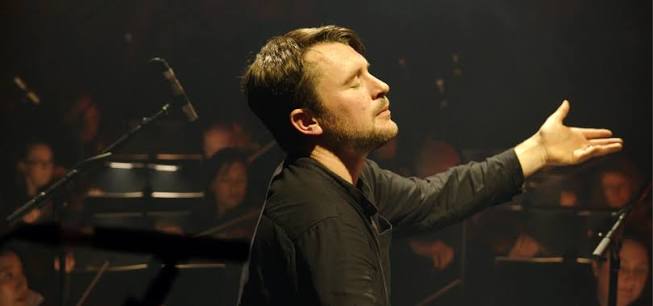
Tonight’s performance of the “Entrée de Polymnie” was as transportative as any version I’ve encountered, and I’ve sought out numerous recordings over the years. Conductor Chad Kelly almost felt beamed in from a French Baroque opera house in 1770 with his deeply emotional catalogue of gesticulations. Kelly, like myself and the rest of the audience, seemed on the verge of tears due to the majesty of such an empathetic, goosebump-inducing piece. I’ve been reading the writings of Tony Conrad lately, a remarkably idiosyncratic violinist / filmmaker / philosopher who bitterly complained of Rameau’s introduction of what he viewed as restrictive musical structures. He even wrote a piece titled “Roughing Up Rameau” (a kind of sequel to his album Slapping Pythagoras) and complained in an interview that “Rameau brought us common practice harmony, the whole idea that underlies the Western system of song that swept the world. So, if I take on Rameau, ha ha, I say there’s room for everybody, don’t you think so? Rough up Rameau, yeah, fine.” If Rameau’s tonic, subdominant and dominant interventions led to the creation of such a glorious composition as “Entrée de Polymnie”, then Conrad’s babblings can be easily dismissed. This was a true bucket list piece for me and this subtle, evocative performance couldn’t have been better.
French organ music never fails to invoke Alain Resnais’ film Last Year at Marienbad for me. The film’s ethereal solo organ score matches the austere black and white imagery perfectly. Francis Poulenc’s earlier composition Concerto for Organ, Timpani and Strings has more heart, even if it sounds like a broken one. Its yearning melancholy reminded me of the ascending/descending ache of Albinoni’s Adagio (which is also in G Minor, though was pieced together by musicologist Giazotto in 1958, twenty years after the huge success of Poulenc’s Concerto), tempered with what could have also been the score for a German expressionist horror film. The piece was completed in 1938 and largely encircles neoclassical tonality. Poulenc did in fact score at least five films between 1935 and 1951, often using rather unconventional instrumentation. He never considered his soundtrack work as particularly important but the originality of his concert music influenced French cinema in a myriad of ways.
Poulenc was diametrically opposed to the strict atonality of the composers of the Second Viennese School and the Concerto featured lovely, organic orchestrations that were brought to life through the presence of organist Jeremy Woodside. The audience devoured Poulenc with great glee and loads of foot stomping. I haven’t witnessed such a physical and nakedly emotional conductor in Ōtautahi before; Kelly seems to come from the hyper-expressive Bernstein school, visually at least, and he acquires results that are very close to perfection. The audience were even treated to a snake-like hissing sound punctuating certain accents in the music.
This may sound sacrilegious to many, but Beethoven had always been a difficult proposition for me. What I’d perceived as his, at times, child-like rhythmic simplicity and bombastic orchestral arrangements have begun to defrost. Arnold Schoenberg, Theodor Adorno and Edward Said’s writings led me to Beethoven’s transcendent late string quartets and piano sonatas and they’ve provided a useful key to his soundworld. My issue had been that most music from this era has a tendency to complacently pedal along waves of generic Romantic tonality (which were novel for its time as it was still in its infancy), pompously shifting between major and minor keys as if that were enough to sustain a 45 minute symphony.
Now, though, particularly in tonight’s performance of Beethoven’s Symphony No. 3 (aka ‘Eroica’), I hear more nuance in his use of repetition and colouring, suspense in his writing for strings (that Hitchcock would die for), and particularly a compositional radicality that must have been exhilarating for its time and locale. I hear the birth of heavy metal in some of these movements (take that Wagner!) and noticed many white males nodding their heads in the audience as if they were at a Slayer concert. But the 3rd Symphony provided more than merely riffs and repetition. The second movement’s funeral march featured an array of tonal shifts and dynamic swoops which the orchestra adeptly executed like the seasoned veterans they are. I’m always shocked at the exactitude of these performers and tonight was no exception.
An instrument that isn’t often highlighted is the timpani, but tonight’s programme would be sorely lacking without Mark La Roche’s brilliant contributions. His meticulous attacks during Beethoven’s 3rd Symphony added just the right amount of bass and tone colour to an already lavish smorgasbord of sonorities.
The CSO were on fire tonight. There were so many microscopic variables at play, even within the enclosed domain of each performer’s concentration, but I couldn’t detect a single misstep. I hope I get to hear more of the orchestra under Kelly’s direction, as his wild displays of corporeal anguish and ecstasy certainly added a dollop of theatricality to the night’s proceedings, but also had the welcome effect of engaging the audience more intimately.
Rameau / Poulenc / Beethoven was performed Saturday 12 September. The header image features conductor Chad Kelly.


