

Naomi van den Broek on learning to be a clown under the tutelage of comedian Tessa Waters – including the work, joy and importance of creating feminist communities in comedy and performing arts.
Sometime in 2023 I was added to a Facebook group with the name Feminist Clown Posse (FCP) and an amazing profile pic of an older female presenting person wearing a killer outfit, roller skates and sunglasses; not an everyday occurance. Certainly not in the Performing Arts circles I moved in – this image, and the name of the group, felt almost anarchic. I was intrigued.

As a person with a fair amount of performance experience, I have never tried clowning. And to my knowledge there had never been the opportunity to do so in Ōtautahi, at community level. I regularly perform in musical and dramatic contexts, and I find that when I work in performance forms that sit outside of my norm, I always get something out of it. And usually, the work I am doing within my field is richer, sometimes better, as a result. Also, I actually think I’m quite hilarious so clowning seemed like it would be a pretty achievable and fun thing to try.
The group started meeting weekly in the second half of 2023. My memory of the first session is introducing ourselves, and playing a number of games that focused primarily on listening, although in ways that weren’t always immediately apparent. A game that I was introduced to in this first session, and which became my favourite, was a game called Big Bird, Baby Bird. This was played in pairs with one of the pair being Big Bird, and the other being Baby Bird. Baby Bird had to move around the space with their eyes closed, while Big Bird sang to them to orient them. In a room full of pairs moving in the space, Big Bird’s song had to be unique and specific enough that their Baby Bird would be able to identify it amongst the others. Baby Bird had to move towards the song, while Big Bird had to keep Baby Bird safe and free of collisions with other bird pairs. This was a wonderful game to play as well as witness: people navigating the room with their eyes closed, and heads cocked to listen for their special call was really delightful.
Most importantly it was then I met our teacher, Tessa Waters, recent arrival to Ōtautahi and a professional clown. As part of writing this, I picked Tessa’s brains about the origin of FCP and her experiences as a clown. FCP was born out of Tessa’s own experiences as a clown, and a cis-lady in comedy. As a comedian for over 20 years, when she came up she was frequently the only woman on a bill, and for the first 10-15 years of doing comedy, she can’t remember doing a gig where she didn’t get her ass touched. She says that a lot of the early years were spent “convincing the audience that you were allowed to be there before you even got to your jokes.” She discovered clown at a crucial moment of transition in her life and essentially ran away to join the circus! She moved to France to study under legendary clown Philippe Gaulier, who she had been warned was a “notorious bastard”.
The experience did not disappoint, and her time with Gaulier sounded like that of a puppet master manipulating and controlling his students for his own entertainment. Many of his students go straight into teaching themselves after study. As a result, Tessa says, a number of clown spaces can be quite unsafe and perpetuate the “I’m the king, make me laugh” mentality that was learned under Gaulier, an approach which Tessa decries as patriarchal and colonial. Women in these spaces (which were pretty explicitly binary) were only encouraged to do certain things: “You could be bossy, but only a certain type of bossy; you couldn’t be sexy; couldn’t be vulgar, too loud or too aggressive.” This meant that oftentimes for women there was no real ‘way in’ or ‘way through’ to their clown. And as there are already so many layers on top of being able to perform as a woman or non-binary or trans person, such as patriarchy, transphobia, queerphobia, racism, fatphobia, getting through to the vulnerability required to find your pure clown and finding joy in that place was difficult in this environment.
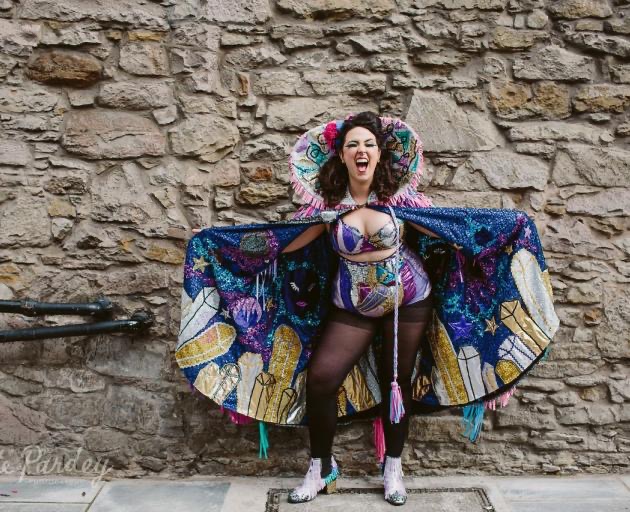
After moving to Aotearoa nearly a decade later, Tessa discussed these ideas with then housemate and fellow theatre maker Anya Tate-Manning (“My Best Dead Friend”, Acting Teacher at Toi Whakaari), who had the idea of setting up Feminist Clown Posse and having Tessa teach it. From that point on it was “a discovery”. And a discovery committed to defining and creating a feminist space, based on the principles of intersectional feminism. Two terms involving about 35-40 participants were taught in Wellington in the heart of the Covid years, which prevented any performance outcome. Out of that cohort have come groups, comedy nights and shows, which for Tessa is a great outcome: “I want to create a space where people can really crack through all that societal stuff and then play in the clown space; which is about finding your joy, your connection with the audience, trusting your instincts, finding and celebrating your weird… But also build a community that can then start making work together, and for that to hopefully influence the scene and get more different bodies on stages, making work, and making their own spaces for each other.”
Tessa relocated to Christchurch two years ago and FCP was a vehicle for Tessa to connect with artists in her local community. She attended a Scratch Night run by Lizzie Tollemache in 2023, at Altiora at Te Matatiki Toi Ora Christchurch Arts Centre. She introduced herself and the possibility of an Ōtautahi based FCP and things just rolled from there.
I was only able to attend one of the sessions on offer in 2023, but there was ‘something’ happening that night which was enough that, in 2024, when the group resumed for the redux, I committed to myself that I would try and attend as many sessions as I could. It was fun to get people’s reactions when I told them I was studying clown – from genuine incredulity, to a barrage of questions about what that was like and how we went about it. (Don’t even get me started on the jokes about our carpool.) It was also great to be in a room full of folk all trying something out of their wheelhouse for the first time.
Our group was made up of 20-30 people with varying degrees of performance experience, from hard-core theatre kids to first timers. It was multi-generational, something I find really really gratifying. Most of us had found our way in through an invite from a friend, or a connection to someone in the group – I can’t identify patient zero – and the attraction varied from people who had always wanted to try clown but had never had the opportunity, to those who were intrigued by the prospect, to the serial ‘love to try new things’ folk. There were professional performers in the group, people who work in or adjacent to the arts, and many whose day jobs are completely unrelated.
It was specifically a feminist kaupapa, body positive, gender affirming, with the motto of “you can have a dick, just don’t be a dick”. Tessa’s focus on making a space that was a truly femme/them space, ensuring the space was gender neutral, honouring people’s identifications and pronouns, making people feel supported, safe and seen, and just kindly but consistently expecting this from all participants was fantastic. As a result, she made us feel comfortable. She made and modeled a space that felt safe to experiment in, while gently challenging us to try new things. She made risk and failure OK and something to learn from, let us “sit in the shit” but also didn’t leave us there for too long, or let us leave feeling like the stink was still on us. But she also guided us into creating a real community experience with each other. The group was kind, enthusiastic, and extremely supportive of one another. Working inclusively, in community, is really magical and special, but also requires a really skilled person at the helm especially as, part way throughout the 2024 sessions, Tessa got the opportunity to present FCP as a show in the Lyttelton Arts Festival!

Each week we would start off by warming up. This included stretching, guided movement through our bodies, moving in space at varying speeds, dancing, vocalising, and specific challenges. I personally found this one of the more challenging parts of the class. Academically I knew it had a purpose and a function, but seeing everyone else be able to let go and be loose and silly*, when I was battling my brain and my body to be able to, was confronting. I found dancing to unfamiliar music to be a real barrier, and sometimes the volume and excitement was over-stimulating to a point where I wanted to leave the room. It got easier, but I often felt like a fish out of water for much of the first part of the class. Each week I would give myself a pep-talk on the way there and reward myself when I got home. Sometimes hard things are found in places you don’t expect. Some weeks I was successfully able to push past the inherent resistance or awkwardness I felt, some weeks I wasn’t. But one of the most wonderful things about class, and I know that I wasn’t alone in this experience, was that every week for two hours regular life just dropped away. You could be totally in the moment, your phone unattended in your bag, your work and home stresses forgotten. Just a group of adult humans jumping around a room making silly* noises, being idiots*.
Then we would work on more games, sometimes as a group, or other times as smaller groups with the rest of the class watching. There was everything from what we called Creep Up when I was young, to quite specific and technical challenges. A particularly memorable game was played in a trio, where one person was the boss, one person was extremely good at their job, and the last person was just jazzed to be there. Each trio went through every iteration of character combinations. It was hilarious watching classmates try on each provocation for size, seeing some combos that utterly sizzled, or people that shone in one role struggling to connect in another. We talked about how birth order and job can play into things we do in play at the end of that session. As an oldest child in a decision heavy job I was not alone in finding others who shared the enjoyment of NOT being the boss in this scenario! I also realised the games where we were in competition with each other did not spark joy for me.
Something extremely significant for me was a class relatively early on where Tessa was teaching us a game and there were a million questions and requests for clarification. I’m of the “No such thing as a stupid question” school of thought, and a person who likes to very clearly understand what is required of me, so I was in that question ruckus with both boots on. I’ve been in situations in the past where people have said things like “just chill out” or “go with the flow” and let me tell you, that did not end well for them. But Tessa took a different approach. She told us that not knowing exactly what was expected was part of clown, and that our job during these exercises was to figure it out. It felt revelatory! For the first time someone had helped me turn off that part of my brain – by making it an instruction. For people who want to know all the rules before starting, making ‘not knowing the rules’ a rule itself was a game changer. And this didn’t mean questions weren’t permitted, just that we could embrace not knowing and finding our way through, and what we might discover along the way.

Throughout all of these exercises and games we were absorbing some of the fundamentals of clowning: fixed point eye contact, listening to the response from the audience, being generous with those you are sharing the stage with, figuring things out as you go along, trying new ideas if something wasn’t working, repeating those that were, and connecting and communicating with the audience. And most importantly, trying to make people laugh, which as it turns out was bloody difficult! A lot of times I felt like people were coming into it naturally while I was struggling, and I think we all had times like that. I remember one of the participants, who I have seen performing in an incredibly funny clown style solo show in the past, saying “I’ve just realised I’m not funny”. I spent much of this experience feeling the same way. It was a hard realisation how difficult making people laugh is, when you are in a room full of people who are also trying to make people laugh. And it feels like everyone is finding it easier than you.
However, each week someone shone, someone made you laugh until you cried, sometimes until you thought you would throw up. We saw each other grow and develop and, with Tessa’s guidance, “find our clown”. And the room was full of such generosity and kindness towards each other. Performing Arts can be so competitive, and oftentimes that competition is baked in through processes like auditioning, trialing, hustling, understudying, nepotism, favoritism etc. that to be part of an approach which was big enough to accommodate everyone being successful and supported and hyped up was incredibly refreshing. It was also great to be in a space where the stakes were just have fun, be stupid*. With so much of my performance work feeling serious, and being a perfectionist by nature, this was a gift.
Tessa also had a real knack for finding amazing character ideas and combinations of performers. For the show, many of us performed in duos, and Tessa had the midas touch. She also could take the smallest germ of an idea, pivot 180 degrees and then send it off on the most unexpected tangent with wondrous results. Sometimes inspiration hit because of a costume choice, or a seemingly random action or sound someone made. Some of the memorable outcomes included diva having a hot flash, a gorilla smoking Gauloises on the banks of the Seine, and Las Vegas wedding chapel slot machines.

As the experience progressed, I began to feel more excited by the challenge of the public performance rather than just shit scared. As we geared up towards our upcoming show, we began to work more on our specific scenes. The show’s loose theme was Viva Las Lyttelton so each of the acts had a Vegas vibe in one way or another. Watching people take their small starting point of an idea and flesh it out into a more fully developed idea was wonderful. Tessa’s creativity and skill at working with each clown, gently provoking and teasing out more from each performer, and her amazing reservoir of quirky, funny and totally unexpected ideas was a show in itself. Her eye for what will be funny, or how a performer can develop an idea is testament to the years of experience she has in this field. We were encouraged to find a loose structure for our scene but not to completely plot it out as the magic in clowning comes from the ‘not knowing’.
I’ve been involved in community projects before and frequently they have had a performance outcome. And oftentimes there has been a sense that these projects come about because of funding opportunities which dictate a public engagement opportunity; a sort of vicious cycle of accessing money that’s not otherwise available, but in the process overlooking the point of making community based work, and overlooking the community the work is being made with. The process ends up feeling like something is being done to you, rather than for or with you. FCP felt different in that the kaupapa was of prime import, and that fed into the performance; the performance was wonderful icing on a very special cake, but not the cake itself.
On the night of the performance itself Tessa told us to be prepared to bomb. Not your usual pre-show pep-talk! But the pep-talk we needed, the one that lets you know it’s OK to fail at doing something new for the first time, let alone in front of an audience. The audience were also expertly managed by Tessa throughout. While it was a primarily warm group of friends and whānau, there’s always that one guy, and Tessa dealt with it. We knew while performing that she was there if something really went tits up. And while it’s impossible to fully tell from backstage, I don’t think anything did! Even a good few months later, thinking about the feeling of group love and pride in that tiny little green room is pretty special. I’ve rarely experienced such a genuine feeling of team spirit in a performance context before, certainly not with people I’ve only known for a couple of months. And if that’s a measure of what was created with FCP then I’d deem it a touchdown. Taking a group of people, with disparate levels of performance experience, who don’t all know each other, and creating something that felt like a genuine expression of the group kaupapa through to a public performance is no small task. It felt safe and supportive, people were valued, and we all grew and had a great experience. And somehow Tessa made it look easy, natural, and did it with huge generosity, kindness and joy. As well as making a show, she artfully made genuine community.

There aren’t many things like this on offer in Ōtautahi: experiences that are inclusive financially and personally, that don’t feel cliquey or too cool for school; experiences that are pedagogically sound and community minded; where the pros are rubbing shoulders with the newbies; and where there’s space at the table for everyone. I can only think that both our city and our scene are so much the richer for projects like Feminist Clown Posse and people like Tessa Waters.
*idiot, silly, stupid are all words that are positive attributes of clown culture.
There will be more Feminist Clown Posse activities in the future – keep an eye out.

 Flat City Field Notes