
Erin Harrington chats with Lizzie Tollemache through the wonders of the internet about their new performance work, on why sharing (in rehearsals) is caring, and how Creative NZ can learn something from defence lawyers. Lizzie’s show The NeuroSpice Girls is particularly interesting for the way that it’s looking to challenge traditional approaches in its creation, devising, rehearsal processes and audience experience. This is one of three great new scripts that are having staged readings this weekend as part of the Festival of New Writing at the Isaac Theatre Royal, 21-22 September 2024 – all worthy of your support.
Erin – Hello, Lizzie. This feels unnecessarily formal. Who are you, and what’s the work you’re staging later in the week?
Lizzie – Arrrrrrrrrgghhhhh “who are you?” is an impossible question. Like, literally the autistic part of my brain wants to take this question seriously and answer IN FULL but do we really have time for an entire existential crisis? How about I’m a high masking weirdo who creates, produces and performs live shows and events. My insta bio says “Sideshow stuntwoman, theatre maker, greedy bisexual…. AuDHD af”.
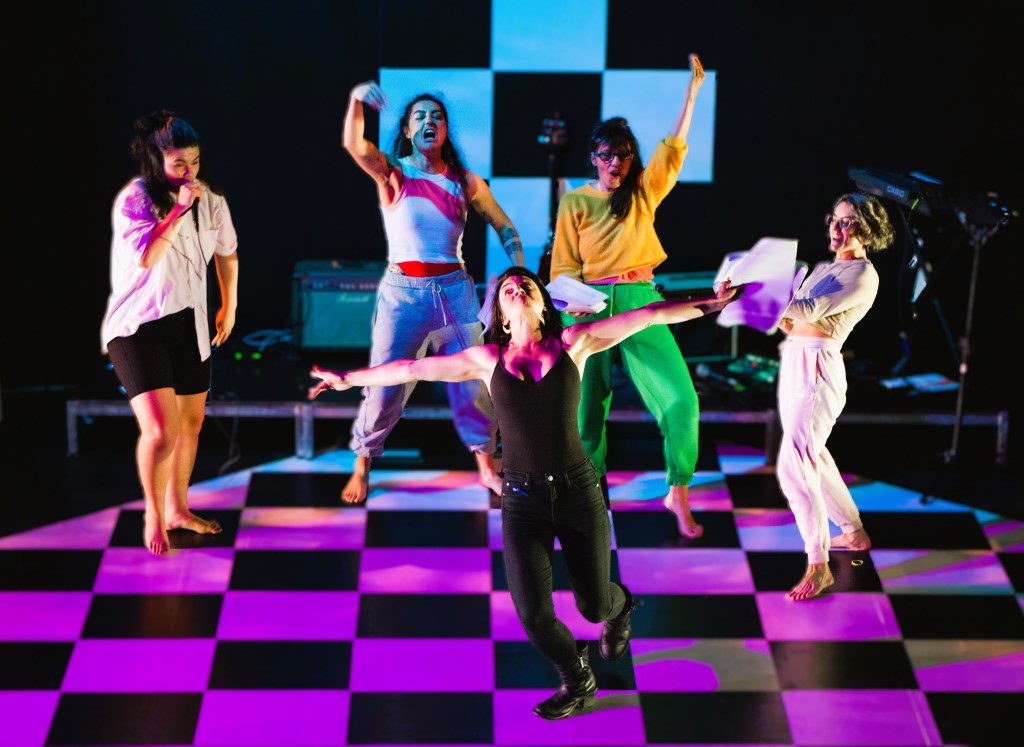
The NeuroSpice Girls is a funny and ferocious neurodivergent odyssey, from gut punching denial to celebration… and how it’s extremely annoying that there’s a bit more to healing than getting a diagnosis, waving round a crystal and overusing the word “boundaries”. I’m telling this story with a vibrant singing, dancing, aerobicizing, truth bomb-dropping Greek Chorus of femmes and thems. The play was written for people who feel alone, who mask, who suspect there is something wrong with them at their core, but who are very good at hiding it. It features true stories, but also a diagnosis gameshow, shame spirals, unbridled 90s nostalgia, and the mystery of what exactly to do with the parts of yourself that you HIDE AND PRAY NOBODY NOTICES.
The staged reading this weekend features a cast of goddamn babes and I can’t believe they all want to come and play with me. We got Dea Doglione (The Cleaner, The Gone and a buttload of theatre), Emma Katene (Fun Home, Girl On The Train, Cringeworthy), Emma Brittenden (clown of whimsy and delight, former Court Jester), Kim Te Pairi Garrett (Shortland Street, Rewena, one MILLION theatre shows). Jo Randerson was a script adviser. Rachel Lenart is the director. Previous reader / collaborators include Waitahi Aniwaniwa McGee, Mel Dodge, Eve Gordon, and Bek Coogan.

Neurospicy is a pretty new term, and one that’s maybe new to audiences. Can you explain what it is (especially for those not terminally online…) and why it is important to talk about this at this moment?
Neurospicy is a fun way of saying “neurodivergent” which doesn’t pathologize us. We are in a mental health crisis, with a tidal wave of late-diagnosed women realising they have been failed by the current system. Wait times for Autism Spectrum Disorder (ASD) and Attention Deficit / Hyperactivity Disorder (ADHD) assessment are over a year in most regions, and yet still the only representation most people have seen is the stereotype of an autistic male prodigy fixated on maths (eg The Good Doctor and The Curious Incident Of The Dog In The Night-time). But that’s a TINY percentage of us.
And the stereotype is dangerous. We are just starting to measure the drastically higher rates of prison, assault, addiction and death by suicide in undiagnosed / untreated ASD / ADHD-ers and it’s bleak. If you walk around feeling like an alien and never understand why, then you can’t find community or self acceptance.
Staged readings are the best, I think, because you get to see things that are raw and still a bit spontaneous. This weekend’s reading is the next step in an ongoing development process. for you, so where have you come from, and what do you hope might be some next steps?
This show began life as part of Playmarket’s Te Hono programme under the title Swimming Lessons, with Jo Randerson as script advisor. We received Palmerston North City Council funding under the Creatives Communities scheme, and Rachel Lenart led a week-long development in 2023, leading up to a showing at Centrepoint Theatre.
Its reception was better than we could have hoped – this thing had legs. People wept and belly laughed and gasped the whole way through and the foyer stayed rammed for two hours afterwards. Our audience told us they had never seen these parts of themselves shown on stage, or even talked about before. People were entertained, acknowledged, (consensually) grabbed in the feelings and encouraged.
Here are some responses, which were taken from anonymous notebooks in the Centrepoint Theatre foyer:
- “Okay, like I knew i was gonna feel called out, but how did you know all of these very secret and personal things about me?! How DARE you but also, thank you.. This gives me hope, immense amounts of hope.”
- “I was on the edge of my seat trying to take it all in. Absolutely amazing. Favourite scene was prob about navigating the health system Very clever. I work in the system so maybe it hit a nerve”
- “I loved the show, I don’t think i’ve ever had a show punch me in the guts as hard as this one, but i did love this punch in the guts. It was a bit of a reality of check for me. If i’m being completely honest, this was the first time I’ve ever really had someone tell me that I’m not alone, I wonder if this was the last time i’ll ever hear that. I hope not”
After a second reading and rewrite, with comedy and sketch input from Brynley Stent, the show was renamed The NeuroSpice Girls to better reach our audience. Now, we are pitching and talking to festivals to find partners for a fully-realised production, premiere season and tour!

Part of the reason I wanted to talk about this piece is that you and I were having a chat a little while back about the really amazing kaupapa of the work, and how everything from the beginnings of the development process to what you are doing now was specifically built to give the best experience to, and get the best out of, neurodiverse performers. Can you outline what that was, and what you found?
Well, we’re trying! It’s bloody hard. It’s a twofer. First, we wanted to start with the question, “What is useful for the room to know about you?” Not a trauma dump, but the kind of practical info that is incredibly hard to raise if the opportunity is never introduced. This meant our first few hours were just getting to know the stuff that makes a HUGE difference but that many of us had never mentioned in a room before – stuff like limiting time under fluoro lights, acknowledging those of us that could happily do eye contact onstage but not socially, explaining stims in advance. The weird thing is, it felt audacious and indulgent taking that time. But then you know what? We’ve never had a more enjoyable, smooth, joyful process. IT SAVED TIME in the long run.
Part two (and we aren’t there yet!) is the dream of creating a full complimentary experience post-show. Theatre is great at affecting people and taking them to emotional places they weren’t expecting. Theatre is TERRIBLE at abandoning them straight after, or wasting the heightened interest and enthusiasm with a lifeless foyer and no vibe.
We’re designing a model for pre- and post-show structure that gives a range of ways to interact with content. Need a moment? There’s a lil area you can breathe quietly and no-one will try to talk to you. Need to respond but don’t have your words? There’s a postcard stack where you can draw or write and contribute to a foyer exhibition that grows with the season. Want to access the things that were raised in the show? There’s a QR code with links to all the books, movies, online forums and playlists. There’s a discussion area for the peeps who want to talk and share their own experiences. Treating the audience as living souls not units of tickets.
But of course that bit will require funders/partners…. Working on it!
It seems like the process you’re developing here is kind of in conversation with other recent developments in theatre, like intimacy coordination. Has that been on your mind?
Very much. Our director, Rachel Lenart, is also an intimacy co-ordinator and there’s heaps of overlap with things like permission to call pause and people being empowered to notice and take action when they’re at a 2 or a 3, not waiting til they’re at a 9 and exploding or shutting down. The funny thing is, having those things in place reduces the stress and anxiety a lot, to the point where the tools we’ve set up aren’t needed as much.
More Swimming Lessons.
These different approaches are really important, in a Universal Design kind of way, because realistically most people involved in creative work, really any work, are going to have demands that are at odds with so-called ‘traditional’ ways of working. They might be caregivers and have whānau obligations; they might live with disability or chronic illness, including invisible illnesses; they might bristle culturally at Western approaches to making; they might just not respond to established ways of doing things. Creative people are often creative because they sit outside of those norms. What do you think some basic entry level things companies, producers, and so on can do to start having better conversations about this?
OOOOF. Big question. So much of the stuff ‘designed to help’ is broken – like, chronically broken – to the point where it’s hard to know how to even start. I see so many people falling through the cracks or missing out on creative work / funding / opportunities that they are able to do incredibly well, because these things require bureaucratic forms and types of communication that are both directly at odds with these brains, and also have NOTHING to do with the actual, in the room skill.
There is no specialist support available unless you have lots of money to go private or are an urgent danger to yourself or others (and even then, we lose folks all the time who were discharged too early / misdiagnosed etc).
Or, take the funding model. It’s hilariously ableist and classist. You know who has the time and resources to fill out funding applications? Organisations who already have money to pay a grant writer, people who aren’t relying on constant hustling to pay the bills, and people with tertiary qualifications. Boom, you’ve just cut out a huge chunk of poor, working-class artists.
It’s like if the legal system expected people to represent themselves. People who are being paid salaries by funders like Creative NZ should be spending most of their time acting like defence lawyers. You go to them with your project, and THEY construct a case on your behalf, to represent your project.
Finally: I have a very deep and specific sense memory of the Spice Girls special edition Impulse spray, which came out in 1997 (and with little butterfly tattoo stickers too). It was honestly great. What would a Neurospice Girls body spray smell like?
Holy shit. OK. There’s a good and a bad.
The bad is Sensory Overwhelm spray – the worst bits of primary school so like towels left chlorine-damp for three days in the bottom of a school bag mixed with bleach from the sick bay, scratch and sniff stickers, metallic tang of iron from the monkey bars, and the weird free lip gloss that would sometimes come with Girlfriend magazines.
The good is citrus, cinnamon and salt spray. A combo that you can’t explain but just feels right and warm and a little bit like hope.
Festival of New Writing runs this weekend at the Isaac Theatre Royal. The other plays are Cricket, Sex, and the Universe by Roanna Dalziel, and Te Ngahere by Kim Te Pairi Garrett. You can get tickets to single plays, or go to all three. Support new theatre!

 Flat City Field Notes
[…] [2] https://flatcityfieldnotes.com/2024/09/17/interview-lizzie-tollemache-on-making-neurospicy-theatre/ […]
LikeLike